What can Year 1 students learn from a packet of spaghetti?
Quite a lot, it turns out.
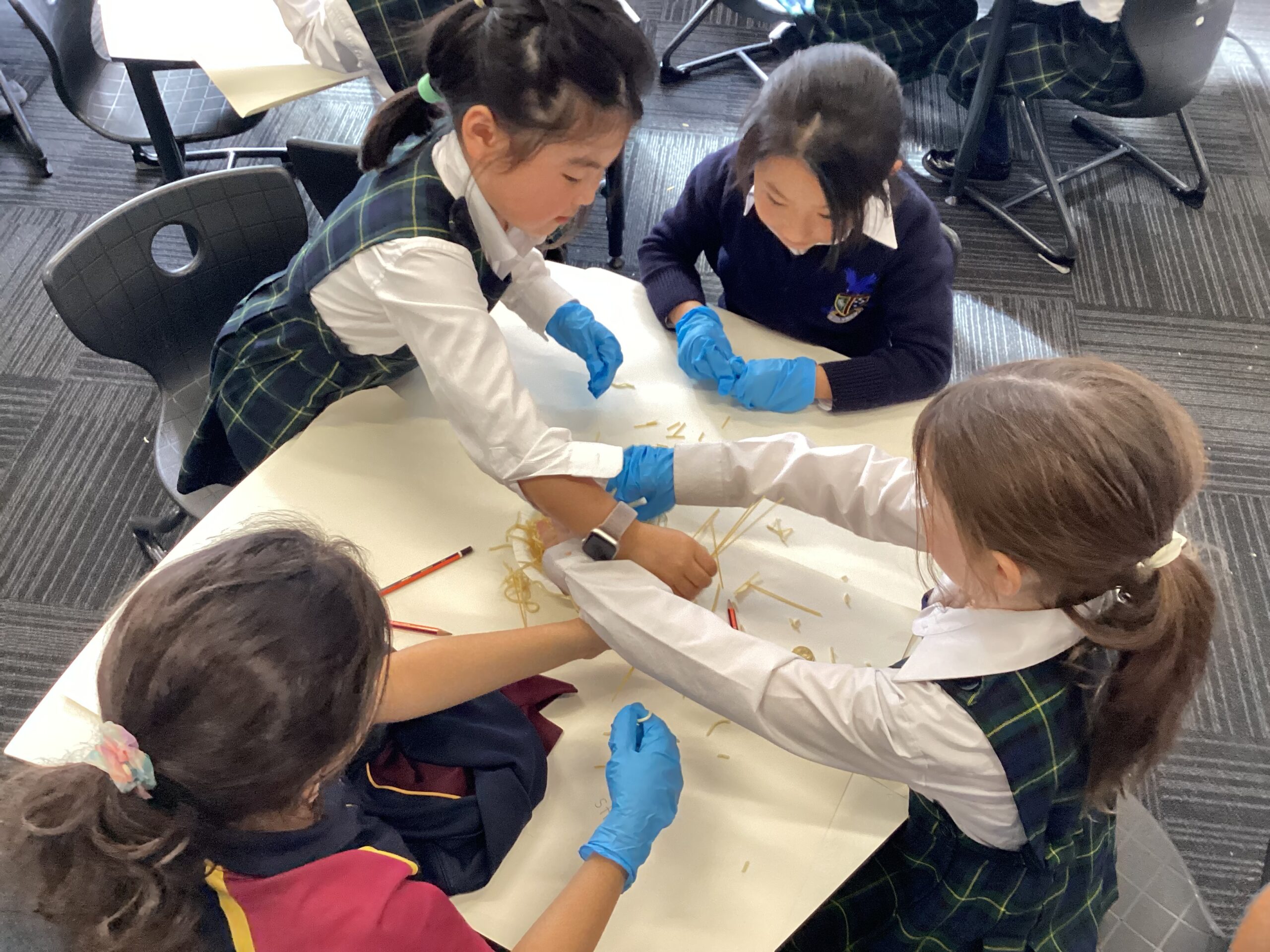
Recently, our Year 1 classrooms transformed into mini science labs as students embarked on a Spaghetti Science investigation. Armed with curious minds and a healthy sense of wonder, they set out to explore the properties of one of the world’s most recognisable foods before and after it was cooked.
The investigation began with a group discussion, where students shared what they already knew and built a bank of scientific vocabulary. Then it was time to put their senses to work. Working collaboratively at their tables, students examined dry spaghetti and cooked pasta, describing what they could see, smell, touch and hear.
The discoveries came thick and fast.
Dry spaghetti was hard and stiff. Cooked spaghetti was soft, bendy and flexible. Some students thought it felt sticky, while others described it as gooey. As they compared the two materials, they practised using new vocabulary and began thinking like scientists, making observations, spotting differences and asking questions.
While tasting wasn’t part of the experiment, students eagerly connected their investigations to pasta dishes they enjoy at home, helping them make real-world links to their learning.
The science didn’t stop there.
Inspired by Shel Silverstein’s poem Spaghetti, students switched from scientists to illustrators, selecting their favourite parts of the poem to bring to life through art. Using strands of wool to represent spaghetti, they created imaginative artworks while incorporating the rich vocabulary they had developed during their investigation.
This hands-on learning experience supported our Year 1 Chemical Sciences unit, helping students explore the properties of materials and observe how they change. More importantly, it demonstrated that science can be found in unexpected places, even hiding in a bowl of pasta.
Who knew spaghetti could be such a powerful learning tool? At The Knox School, even lunch-table favourites can spark big questions, exciting discoveries and a little scientific magic.